
How ADHD in Youth Still Shapes Adulthood

Updated: Jul 21, 2025
Not all ADHD is loud, disruptive, or easy to spot. For many of us, the signs were there when we were young...but no one connected the dots.
We were zoning out in class, forgetting our homework, melting down from overwhelm, or holding it all together until we couldn’t anymore.

But instead of support, we were often misunderstood.
Not because we were broken.
But because ADHD was still seen through a narrow lens.
Especially if we weren’t hyperactive boys bouncing off the walls, adults around us didn’t recognize what was really going on.

When ADHD Was Missed, Labels Replaced Understanding
Many of us weren’t diagnosed until adulthood, if at all. Before we had the language or tools, we were called things like:
“Lazy”
“Messy”
“Too emotional”
“Daydreamy”
“Needs to try harder”
And over time, we started to believe it.
So we adapted by masking.
We became the helpful ones, the people pleasers, the perfectionists. Or we pushed back, got louder, shut down, or acted out.
Not because we were bad kids, but because no one taught us how to work with our brains.
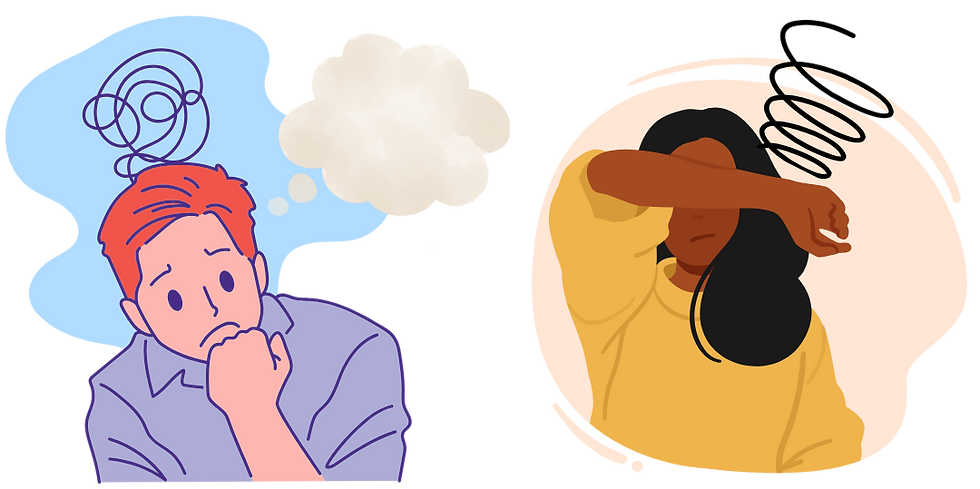
That Misunderstood Child Is Still in You
Even now, that inner child shows up in moments that seem small on the surface but run deep:
When you doubt your own memory
When you feel ashamed for resting
When you think, “I should have figured this out by now”
When one piece of criticism sends you spiraling
These aren’t character flaws. They’re echoes of early wounds.
And healing doesn’t mean blaming parents, teachers, or caregivers who didn’t know better.
It means recognizing what was missing and giving ourselves that care now.

What That Inner ADHD Child Needed (And Still Does)
Many of us grew up in environments that expected us to behave like neurotypicals.
But our brains needed something different.
Maybe we may have needed:
Understanding, not assumptions
Structure with flexibility, not rigidity
Encouragement, not pressure to be perfect
Space to be fully ourselves, even when we were loud, messy, sensitive, or scattered
Now that we know better, we can do better for ourselves and for the next generation.

Breaking the Cycle: One Child (or Inner Child) at a Time
If you’re parenting or supporting a child with ADHD today, you have the opportunity to shift the story.
They don’t have to grow up wondering if they’re too much or not enough. They can learn early how their brain works, how to communicate their needs, and how to build trust in themselves.
And for the adult version of you? The one still unlearning shame and trying to build structure that actually works?
You’re allowed to give yourself the grace, support, and self-love you always needed.
✔️You’re allowed to rest without guilt.
✔️You’re allowed to ask for help without proving you’ve earned it.
✔️You’re allowed to take up space.
You weren’t broken—you were unsupported.
Now, you get to be the support system that kid version of you was missing.
P.S. If you’re ready to help others rewrite their ADHD story and heal their inner child, too... The 3C Activation Coach Training Program gives you the tools to support neurodivergent clients with compassion, structure, and clarity (while transforming your own journey in the process).
🎓 Earn 38 ICF + 25.5 PAAC credits
💡 Learn how to coach in a way that actually works for ADHD
🧡 Break the cycle—for you and for others
You’re not behind. You’re becoming.
With belief,
Coach Brooke


